Like a magpie, I've always been drawn to things that have sparkle, from rhinestone-embellished housewares to gold lamé get-ups in second-hand stores or beetles whose metallic armors reflect in the sun. But in my interactions with the world, oh, how I can fixate on the not-sparkly stuff: ill-timed traffic lights, a web page that won't load, the impolite server.
Post-pandemic, I took to saying, "Everything's broken, and nothing works." It's not good for the soul, and as a lifelong writer, I've noticed it's also not good for creativity. This blog is about redirecting my attention to what's good in the world -- seeking and finding joy in the same way I notice sparkly objects around me -- and writing about it.
There is an old nursery rhyme about magpies, "One for Sorrow," which tells us a solitary magpie symbolizes sorrow, but two magpies symbolize joy. This blog is about looking harder for the good stuff. Here's to finding those second magpies.
Three years ago today, on my mom’s birthday, I received a call that punched me in the gut during a business lunch: It was my dad, letting me know that a possible donor heart had been found for him.
In the business of heart transplantation, the person in need of the heart lives in a kind of limbo as a name on a registry of potential recipients. My dad was fairly high on the registry because of the severity of his condition, but many months had passed since he was placed there. And until that phone call, every time his name showed up on my caller ID, my stomach would do a flip.
My lunch partner, a client, had the uncomfortable job of watching me cry into my sushi after I hung up. As I apologized for my blubbering, I remember him saying, “It’s okay. This is real life!” He was exuberant, and I knew what he meant: It’s so easy to forget that life isn’t a collection of errands and pastimes and lunch dates and things that merely add up to a day and another day and another one after that.
En route to the hospital, I picked up my kids from school. They were giddy as just-fed hamsters, not being old enough to fully grasp the complexity of what was happening. I’d say the glee was slightly more than they show at the county fair when I let them eat cotton candy, and slightly less than they show on Christmas morning. Gently I explained that our excitement came at a very high cost: Their grandpa was about to gain a heart because someone had died, and the surgery he was about to have was incredibly serious. It was important to me that they regard the gift much differently than ones left under Christmas trees. This was no Lego set or American Girl doll. This was real life.
Once at the hospital, I realized the kids would need some diversions. There would be hours of waiting for screening results. The surgery itself could take well over a dozen hours. So, I left to buy some coloring books at a drug store up the road. On my way back in, waiting by a set of interior elevators that would take me up to my dad’s room, I overheard a somewhat hysterical conversation taking place between two women. They were huddled together on a bench, shoulder to shoulder, heads bowed. One was telling the other what a beautiful thing she’d done, what an amazing choice she’d made. She said to take comfort in it, because it meant someone else out there would get a chance to live. The sobbing was unbearable. My chest dropped into my ankles. Was this the donor’s loved one?
Because his donor’s survivors opted not to respond to the letter my dad was allowed to write several months after surgery, we still don’t know who my dad’s donor was. We might not ever know. But I have my suspicions.
The day my dad had his transplant, there was an accidental death here in town, a young woman hit by a car. I read about it in the news the next day, noting how close the time of death was to the time my dad got his call. Was it her? My dad’s donor was classified as “high risk,” which can mean any number of things, one of the typical ones being a history of IV drug use. The obituary of the woman whose death was reported in the news included a request that donations be made to a foundation for diabetes research. Surely she’d been a diabetic. Did she receive insulin by IV?
I don’t actually know if this woman was my dad’s donor, but I feel sure that those women in the hospital atrium were her loved ones. So, I feel sure she was somebody’s donor. That’s why I keep a photo of her on my desktop. For the past three years, her face has greeted mine at some point nearly every day, every time I fire up the machine where I write these words. Every time I look at her face, cupped in her own hands with a playful light in her eyes, I say a little prayer for her and the people she left behind. I wonder if she did what she wanted to do before she died. I feel grateful. And sometimes I linger a little longer on the picture, remembering that this is real life. We each get just one to call our own. Mine is nobody else’s, and I get to choose what becomes of it, at least until I die and leave a little piece of it to someone else.
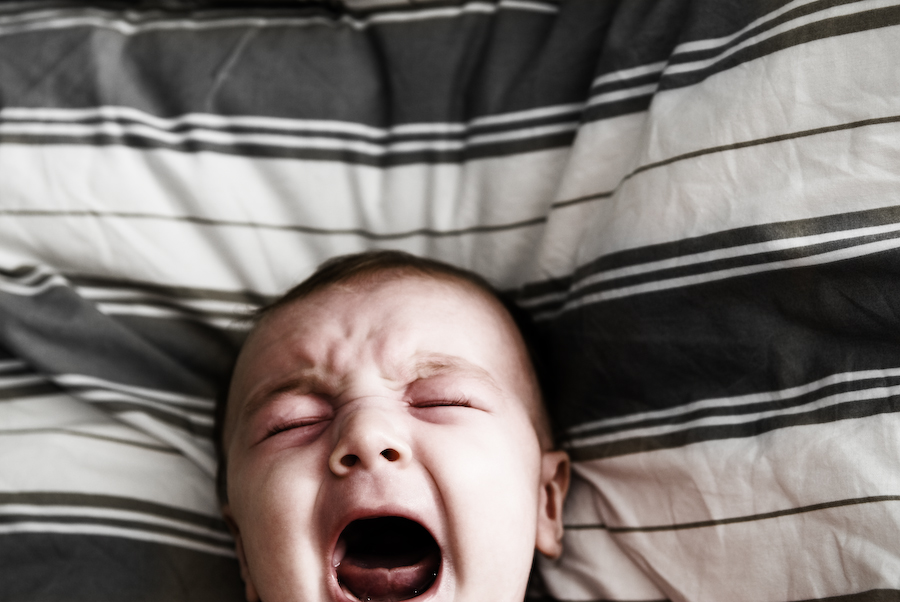
A stock photo of a happier baby than our actual baby. (Photo credit: Pedro Klien, via flickr // CC BY 2.0)
My daughter rocked a killer tan when she was a newborn. It was actually jaundice, but it made her look all devil-may-care bronzed. Strangers would peer under the hood of her car seat and remark on her golden complexion. “Hello, precious!” they’d say. “She’s such a beautiful color!”
While jaundice is nature’s sunless tan, it’s also exhausting. My daughter slept almost nonstop for 10 days after she was born, soundly as a hobo. In fact, there were times my milk came tumbling through the ducts like pointed rocks, painful because she’d slept through yet another feeding before it. Dutifully obeying hospital orders, I’d rub the nipple across her mouth to roust her. Her eyes fluttering, she’d root for a few seconds. Then she’d conk out again, lunch spraying all over her face or, worse, toward someone who probably didn’t want breast milk on their shoes.
“She’s a good sleeper,” we got to say. At least there was that.
When she finally woke up, she really woke up. That’s when we met the real her, the one with plans to undertake an eight-month project of crying us crazy. Naps? She could take or leave them. She just wanted to nurse, and she stopped taking a bottle. She’d bite on its chewy nipple and cry. The sleep deprivation became ungodly, enough even to make my husband nearly snap. And he’s a retired Green Beret, people. They train for that shit. Part of me felt like a rock star for enduring more than eight months of soprano crying and shattered sleep—an hour here, 45 minutes there—but another part of me started to grow a phantom second head that looked like Edvard Munch’s The Scream. It deserved a green beret of its own.
I see people with those 26.2 marathon decals on their rear windows, and I wonder where my decal is. Try a marathon that lasts 5,800 hours, give or take a dozen. Nobody tells you if the finish line is at 6,000 or 287,000, and you have to do it in your fat pants. Your main fuel is Whatever Food Items Fit into a Mouth Hole in Seven Seconds or Less. That’s the approximate time it takes before a tiny dictator starts screaming at you like her arms were just hacked off until you nurse her. Oh, and instead of a cheering section, there are assholes on the sidelines who never ran the same marathon, telling you you’re doing it all wrong. Yeah, I need a decal.
My daughter is nearly eleven now. I’m remembering back to those days because of a tent I came across in our basement. The connection? When she was old enough to crawl, I once set up that tent in our den and lay down topless inside of it, zipper shut, presenting myself as a living buffet. As I tried to sleep, my daughter latched on every few minutes for a sip. She did 180s with her body, using her teeth as anchor. And while it wasn’t the greatest sleep, I actually caught a few winks through the pain.
That tent reminded me of all the time I spent agonizing over what to do. It reminded me of endless Internet searches, looking for ways to get some sleep or at least stay awake with my sanity intact. It reminded me of all the second-guessing I did about my mommy skills. So many books, people, and websites offering conflicting advice. A horizon that looked dark as ink. I always told myself that once I got out of those woods, I’d go back and leave my own mark on the interwebs, letting other pooped-out parents know exactly how we survived. But once I got out of those woods, I couldn’t stand to look back and wasn’t even sure how we managed. Even today I’ll sometimes see a tired mom with a new baby, and I get this primitive urge to flee, afraid she’ll grab onto my ankle and drag me back down to that black hole where you can think of and talk of nothing but your baby NOT SLEEPING and CRYING ALL THE DAMN DAY LONG.
The truth is, we survived because of ridiculous things like that tent stunt. We survived because we were willing to try anything. We survived because I curled up inside the 38×24 space of a Pack-n-Play with my baby on my boob just to keep from losing it on her at 3:45 a.m. We survived because I learned to coast my car through stop signs on country roads, knowing that even a few seconds at standstill would ruin a nap. We finished the marathon because it took place on a narrow bridge over a bottomless canyon, with all the rungs and planks falling apart behind us. What else were we supposed to do but just keep going?
I have no formula for success to share. It was too complicated. I’m just here to say to tired parents: You can come out relatively sane on the other side of this thing. For me, it took nearly nine months to begin seeing the light at the end of the tunnel. When naps finally ended just a year later, I felt free as a bird. Instead of screwing up nap after crappy nap, we had blessedly early bedtimes–think 5:30 p.m. Gone was the question of getting enough sleep. No more was the tent used as a nursing depot. Instead it was restored to its rightful place as a bedroom-in-the-woods. We can doze there now well past sun-up, birds chirping loud enough to wake the dead but not loud enough to wake my daughter, who again sleeps soundly as a hobo.
Kendall Smedley was just twelve years old when a latent snarl of malformed vessels in her brain—there since birth—ruptured and left her lifeless in the ER at a children’s hospital in Madison, Wisconsin. That night, whether by chance or providence, a respected neurosurgeon fresh out of a late-night surgery got the midnight page. At Kendall’s bedside, he swiftly made the call: Emergency surgery would be necessary to relieve brain pressure. Nurses ushered Kendall’s parents from the room just before she coded.
Kendall after emergency brain surgery
Kendall’s mom, Susan, didn’t know her firstborn had crossed over that night. Neither did her father or her stepfather. They were too preoccupied with the post-surgery prognosis: There was a mere 20 percent chance Kendall would survive the 24 hours ahead. She came out alive, but Kendall can’t remember any of it, not even the hours before she’d lost consciousness, not even calling home from the slumber party where she’d been trying to fight off a headache.
“I’m not going to stay,” she’d told her mom as the rest of the girls played in the background. “This is a really bad one.”
Headaches had long been typical for Kendall but were usually nothing Ibuprofen or chiropractic adjustments couldn’t shake. During the week before the party, they were happening daily. She’d even gone to the chiropractor the afternoon of the brain bleed. After the adjustment, she’d felt well enough to jump on her trampoline before heading to her friend’s home. Kendall’s last memory of the night was of ordering pizza with her friends. She doesn’t remember the string of calls she made to her mom, the last one in hysterics as Susan steered down Highway 12/18 toward the Madison suburb of Oregon.
“Hurry, Mom!!!” Kendall had screamed. “I feel like my head’s exploding!!!”
Then, she just went quiet.
“She’d been having headaches off and on for years,” recalls Kendall’s mom, a vibrant lung-cancer survivor who now works as manager of national events for the National Lung Cancer Partnership. “They weren’t debilitating to the point that she’d just lay there, but they were consistent. I’d taken her to her pediatrician, and at the time we were looking at hormones, because she was at that age. How many pre-teen girls have headaches, you know?”
The culprit behind Kendall’s headaches was actually an AVM, or arteriovenous malformation. This rare congenital defect can go undetected for years or even a lifetime. And it can present as a single tangle or many clusters in the brain’s circulatory web. Some are expansive, others small. Though AVM ruptures are generally less deadly than other types of strokes, Kendall’s was the exception.
Two Years Later
On a sunny winter day in Madison almost two years after her surgery, Kendall is visiting her neurosurgeon, Dr. David Niemann, in his University of Wisconsin Hospital office. Looking at her, nobody would guess she’d been to the brink here just two years earlier, head shaved and stitched on one side, saddled with speech loss, memory loss, and a dismal prognosis. Though Dr. Niemann continues to monitor what remains of Kendall’s AVM, today’s business isn’t medical. She’s interviewing him for a school report about someone who inspires her.
“Patients like you, who just were so sick,” he says, “to be able to really make an impact and see someone get back to normal when they were really not normal or almost dying—it’s a really great thing. Just treating patients and seeing them get better is one of the most motivating things for me.”
Dr. Niemann says AVM ruptures are uncommon and have just a 10 percent mortality rate. Only part of Kendall’s AVM ruptured, which is not unusual, and only part of what remained could be embolized. Shaped like a jellyfish, it presented as a central snarl with a long tangle of vessels meandering along one side of Kendall’s head. The snarl is what ruptured.
“Your story is a little more unusual,” Dr. Niemann tells Kendall. “If you didn’t get treatment right away, you wouldn’t have made it. Yours was more unusual in the severity and then also in your recovery. You’ve really had a remarkable recovery…and your story isn’t over yet.”
Kendall’s only lingering symptom is short-term memory loss. Emotionally, she’s rebounded with superhuman calm, even though medically she’s not out of the woods. Early on, once she regained verbal expression, she says she’d ask the same question seven or eight times in just a few minutes. But working with a memory specialist, she’s made leaps in improvement and honed extraordinary coping skills. Her lifeline is a notebook for jotting important information: homework, test dates, plans. She recently made High Honor Roll at her middle school.
“There was not a single I can’t go back to school or I don’t want to do this,” says her stepfather, Trent Gerber. “No, it was when can I go back to school? That isn’t any different than she was before, except she works harder now because she wants to maintain the same high level.”
On a cold January day as I visit their suburban home, Kendall stands with her arms wrapped around Trent in the front doorway. She’s all sandy hair and freckles, melting into him as she readies to be interviewed. Unlike Kendall’s mom, who’s more a kindred spirit to Kendall, Trent seems somewhat stupefied by Kendall’s sweetheart-warrior nature: timid but strong, threatened but unafraid, so utterly un-childish. She’s a force, a child who leaves adults in wonder.
The X Factor
It’s certainly fair to wonder if Kendall has some sort of X Factor that most people aren’t born with. You can’t call it pluck. It’s something more primordial and esoteric, a resilience like grass. After winters and fires, it’s always grass that rebounds first and without ostentation. Kendall is a force like grass. Her mom says she was just born that way.
Scientists have long questioned what makes a person resilient, and mainstream studies disagree with Susan. They report resilience is not an inborn trait, that it’s primarily gained through positive outside influences: mentors, parents, friends, and experiences crafted to impart a sense that all of life is navigable. But one has only to revisit a yearbook to find resilient, even inspiring adults that have emerged from anything-but-inspiring circumstances with scant positive influences. Clearly there are exceptions. Kendall’s story is a mixed bag, leaving one wondering: Is her resilience a product of nature, nurture, or both?
Meet Mama Tiger
Susan Smedley-Gerber is a veritable mascot for bounce-back. In her early 30s, she was diagnosed with lung cancer and had most of one lung removed. Kendall wasn’t even a year old yet and had to be abruptly weaned. The cancer was found early because Susan wouldn’t lay off the doctors; they’d not been particularly concerned about the copious blood she began coughing up one weekend. Susan pressed and pressed and pressed them. (Think well-dressed wolverine with the self-composure of Emily Post.) Her persistence was life-saving: Lung cancer has a very high mortality rate, so early detection is critical.
“Immediately after they said cancer, I went into medical shock,” Susan says. She was in a daze for half the day–long for her but arguably not much time at all for most people coping with such a scary diagnosis. “I responded much differently than I did with Kendall’s ordeal. I was just in a totally different place. With my cancer, it was mostly about leaving Kendall that I was so distraught. Being completely [mentally] unavailable for a 12-hour period like that? That’s very atypical for me.”
Just 12 hours to regroup was all it took. Imagine that. Susan would show equally remarkable resilience during a dreadful string of unrelated tempests to follow the cancer. Within a few years of her cancer recovery, she made a painful discovery about her marriage. (She sees no need to broadcast details.) By then, she had a young son, whose ADHD and violent rages required professional intervention. Susan tried for more than a year to salvage her marriage but ultimately knew it was a cancer, too. The divorce terms required her to share placement of the kids, with a man she no longer trusted. Then Susan’s mother suddenly fell ill and died.
If you’re picturing a woman broken by a deluge of heartaches, don’t. Susan bounced back with her spirit not only intact but deeply strengthened after each blow—even, eventually, after Kendall’s brain hemorrhage.
Imagine the night of that hemorrhage. When the neurosurgeon was called in for emergency surgery, Susan felt like a dark thundercloud was condensing onto the head of a pin. Releases were hurriedly signed, machines and trays wheeled about in a flurry, and according to Susan, the staff dropped all eye contact with the family. There wasn’t time enough even to move to an actual operating room. In the midst of that firestorm picture this: The mother calmly leaning over her twelve-year-old daughter, warming the freckled cheeks not with tears but whispers of encouragement:
“I know you’re probably scared,” Susan said. “I know you can hear me. The doctor is going to make you feel better. We have to leave the room now, but we’ll be back as soon as we can. They know what they’re doing. And if you have to cross over, Gram will be there. She’ll keep you safe…but you have to come back.’”
The Science behind Resiliency
Just what makes a person capable of standing up so tall in the storm? Despite mainstream science’s tack that it’s about positive childhood influences, behind-the-curtain science tells a different story.
Michael Brandt, a psychologist at the Tomah Veteran’s Assistance Hospital in Wisconsin, says mainstream science often dishonestly shies away from crediting genetics even when credit is due. He takes issue with that. Brandt has long been engrossed in resilience research and is the Wisconsin National Guard’s go-to guy for training on the subject. His opinion: Save for slight points that can be gained by regularly getting outside one’s comfort zone, resiliency is pretty much a steady-state affair, and certain people—like Susan and Kendall—are just more predisposed to it.
“Minimizing the genetic factor is reflective of the field in that it’s not sexy to talk about the innate qualities inherent to resiliency,” Brandt says, “in the same sense that it’s not attractive to publish studies that discuss the genetic correlates of IQ. Researchers all know that it’s the reality, but their work has a better chance of being published if it minimizes the predisposition aspects: Americans don’t like to acknowledge what we’ve innately inherited because it flies in the face of a self-made ruggedly independent mentality.”
Perhaps Dr. Brandt and sexy science are both right. No matter how much Susan insists Kendall was “just born that way,” one cannot overlook the powerful examples of resiliency Kendall witnessed in her mom. Susan exemplified that “self-made ruggedly independent mentality” on a daily basis. Cancer, organ loss, divorce, the fabled problem child, the loss of a parent, and the near death of her child all failed to exhaust her reserves. Instead, they somehow multiplied them.
In the moments in the ER, and in the hours and weeks following Kendall’s emergency surgery, Susan sent frequent updates to friends and family, maintaining in them the kind of composure usually reserved for world leaders in crisis situations. This was typical Susan. The feeling she conveyed wasn’t so much that Kendall was going to be okay. It was that things were going to be okay—no matter what. Nobody who knows Susan would accuse her of living in denial. She just never went to a place of fear, and neither did Kendall.
“I don’t remember ever having a thought that I wouldn’t be there the next day,” Kendall says. “I just kind of knew that I’d be okay. I knew I was going to go home and get back to my life.”
Kendall’s stepdad believes there’s a deep spiritual lesson to behold in Kendall’s recovery. “That’s something she’s taught us all lessons about—faith and strength,” he says. “It’s funny that a 14-year-old can teach a 40-year-old those types of lessons. She did it without trying, just being the person she was.”
There’s a spiritual lesson to behold in Susan, too. In light of her strong personality, it’s interesting that she chose to trust rather than panic that night in the ER when control slipped through her fingers. In doing so, she discovered that true faith makes a person fearless, and that faith is at the root of strength.
“Once I was standing in that emergency room with Kendall, there was nothing I could do,” Susan says. “Whatever was going to happen was independent of me, even though, like any mom worth her salt, I’m a ferocious mother tiger when it comes to protecting my kids.”
Obviously Susan had coped with not having control over circumstances many times in the past but never with such enormity as in that moment. The closest she’d come was with the placement of her kids. Entrusting them to a person she had no reason to trust was especially excruciating, largely because it meant a long-term lack of control. There seemed to be no working with or around it. The risks would go on and on. Uncharacteristically, she’d long been having trouble bouncing back from that one, until the AVM rupture.
“There are things that you can’t do anything about, even when you’re standing right in the room,” she says. “The experience helped me to go, ‘I couldn’t have saved her then. I didn’t save her. I didn’t have any real impact on this situation at all, except for just loving her through it. I know that if God can bring her back, all of these other issues that I feel are so ominous [referring to the split placement] are nothing. And I know now that she has her own path.”
When the headaches recently resurged—a month-long scare that turned out to be a simple vision problem—Kendall maintained her own fearless focus. Just fourteen, she proudly talks today of becoming a child-life specialist like the one who helped her and her family in the hospital. The career would give her daily opportunities to work with pediatric patients, bridging the gap between the hard corners of medicine and the soft curves of human vulnerability.
The resilience shown by Kendall and her mom raises questions of intrigue for those with less bounce-back. If we trust the word of mainstream science, we should be paying closer attention to the likes of them—not just admiring but learning. As for Kendall, whether it be by genetics, example, or the higher power she trusts, she’s in possession of all three possible wellsprings, uniquely equipped to rebound as well as pass down her gift:
“She’s never used her AVM as an excuse,” Trent tells her neurosurgeon one day. “There’s been no, ‘This is too hard now,’ never anything like that.”
“Like her mom,” her neurologist likes to say. “Just like her mom.” ᴥ
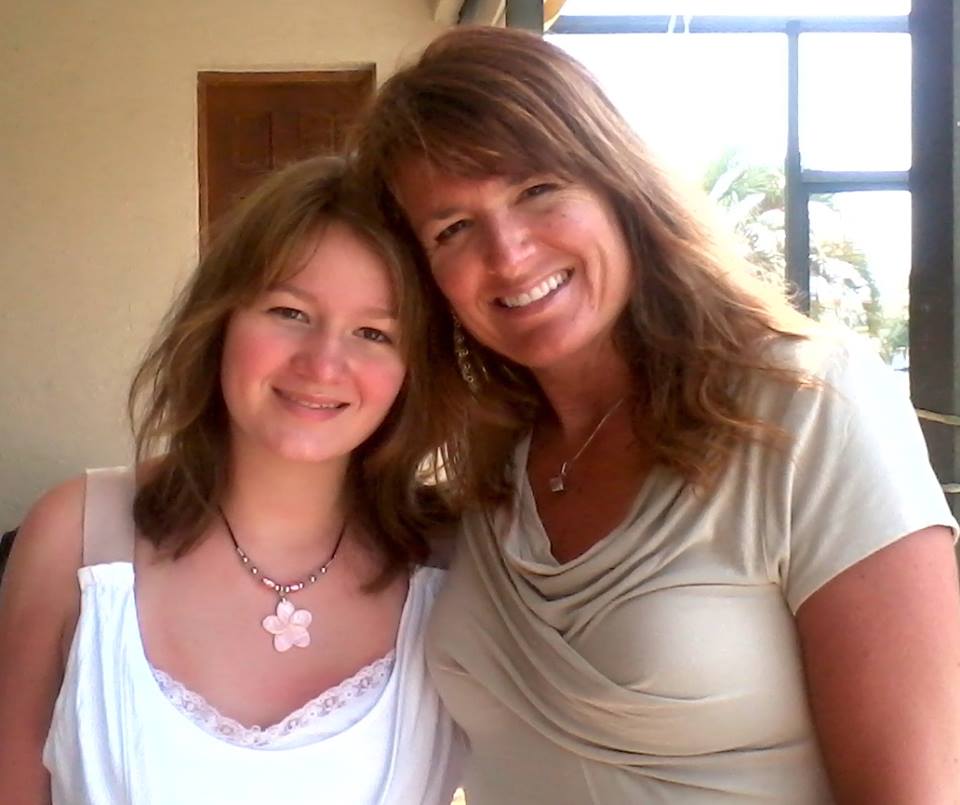
Kendall and Susan two years after Kendall’s AVM rupture

 The Second Magpie