For six months, I had a battery-operated dad. This is different—significantly—from having a battery-operated “boyfriend.” (We all know what that looks like.) My dad’s battery was a big, heavy square that fit into a wearable pouch given to him in the cardiac ICU. He’d just had open-heart surgery, and the battery connected to a tube that ran through a grotesque little hole in his stomach and up to a device that helped his heart pump. The hole and the device, called an LVAD, were put there on the advice of Mayo Clinic doctors. That’s because my once healthy 62-year-old dad had rapidly and suddenly plummeted into acute heart failure over the six months prior. The doctors called it a mystery of sorts. And they called the LVAD a bridge to transplant.
Before any of this happened, I had a long stretch when I didn’t get along with my dad, for about 15 years. I tried. He tried. But it was really strained, and our fights were poisonous. However sweet my earliest memories of him, they could not support the weight of our inharmonious personalities as I grew up and developed opinions (and hormones). Tender days of horsey-back rides faded miserably into the distance as I traveled the roads of adolescence and beyond. For a time, I suspected he didn’t even like me. Loved, yes, but not liked–and the feeling was mutual. During my mid- to late 20s, we managed to tread lightly around each other, which had the effect of looking like we’d made peace. But sometimes the veneer would crack open. Angry tears were never far away for me.
When I was 31, I gave birth to my first child, a cherubic little girl, and my dad became Grandpa. He was smitten. I have a picture of him sitting next to her on the brightest green lawn during her second spring. He’s showing her how to make a blade of grass whistle. The conversation looks serious, resembling a photo my mom keeps on the fridge, one of my dad having a fancy tea party with their neighbor’s toddler. Lace gloves were involved. Tiny teapots. In the picture, my dad has the same thoughtful look, like he’s at the labor-negotiations table again. He’s really at that party. I’m a grown woman, but when I first saw the picture, it made me jealous. Why didn’t my dad do those things for me? Why didn’t I get that guy?
At least my daughter got him. And as I watched his delight in her unfold, as I walked my own path as a parent, I forged a bridge of empathy toward him. I learned what he’d meant when he once admitted he always loved but didn’t always like me. I learned how hard it was for him to temper his cutting words, because I struggle with that same flaw as a parent. I learned that even the most lovable kids are exhausting. I discovered that sometimes, yes, you’d rather lick an outhouse than play another game with them, especially if it involves you doing voice-over for their toys. I learned that it’s easy to be strong out of the gates but hard not to get whittled down. Mistakes pile up, and you worry you’ll be remembered in the worst light—not as the horsey-back parent you once were but as the parent you became, the one who sometimes lost her shit over nothing.
My daughter was eight and my son was three when Grandpa became battery-operated. I was sick with worry but tried to hide it from them. The thought of them growing up without him, forgetting him even, was overwhelming. Ambulance sirens in the distance would give me an indigestible mix of sympathy and anticipation that’s hard to explain to anyone who’s never awaited a life-saving organ donation. Every time I watched the MedFlight helicopter zooming overhead, the yin and yang of it would choke me up. “Let’s pray for that person to be okay,” I’d tell my kids. And we would. Guiltily, anxiously, I’d wonder if the sirens signaled the phone call my family had been waiting months to receive.
On November 10, 2011, just after noon, I got that call.
“Dad, I’m in a meeting,” I loud-talked into the phone over the din of the restaurant. I was having lunch with a client. “Did you need something?” He was yammering away, and I kept repeating more loudly that I was in a meeting.
“I have a HEART!” he finally shouted. “They found a match.”
The first thing I did once I stopped blubbering into my lunch was to call my daughter’s school and have her pulled from class. As I collected her into her seat and steered toward the sitter’s to pick up my son, I finally divulged to her how very serious this surgery was. I’d held off until then, because I hadn’t wanted to scare her. And, selfishly, I hadn’t wanted to field questions that would scare me. Kids ask hard questions.
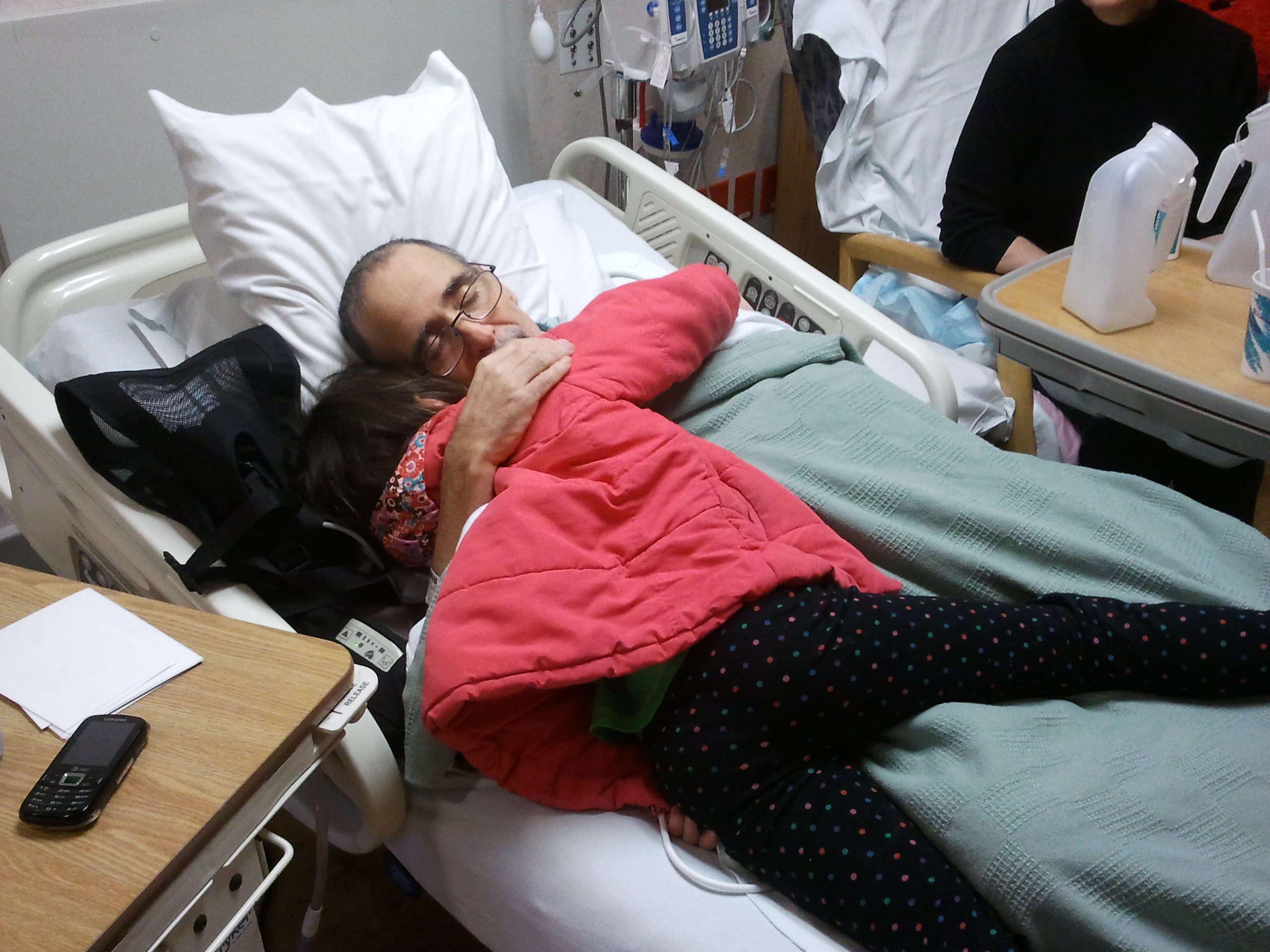
In the rear-view mirror, I saw in my daughter’s eyes the most penetrating concern and hope and love. She just wanted Grandpa to be okay. And I felt the feelings right along with her. I wanted him to live long enough for her to remember him, for my son to get to know him, and for me to tell him I was happy to have him back, warts and all. Thanks to one amazing stranger, one generous donor, that’s exactly what happened:


 The Second Magpie